Category: Monsters

  • Cablemaw

    Cablemaw

    Cablemaw begins as the spare lead you keep because it might fit something one day. Add a few retired chargers, a telephone cord and an adapter of mysterious origin, and the pile becomes suspiciously warm with personality. In this fictional bestiary, clutter is its own form of electricity.

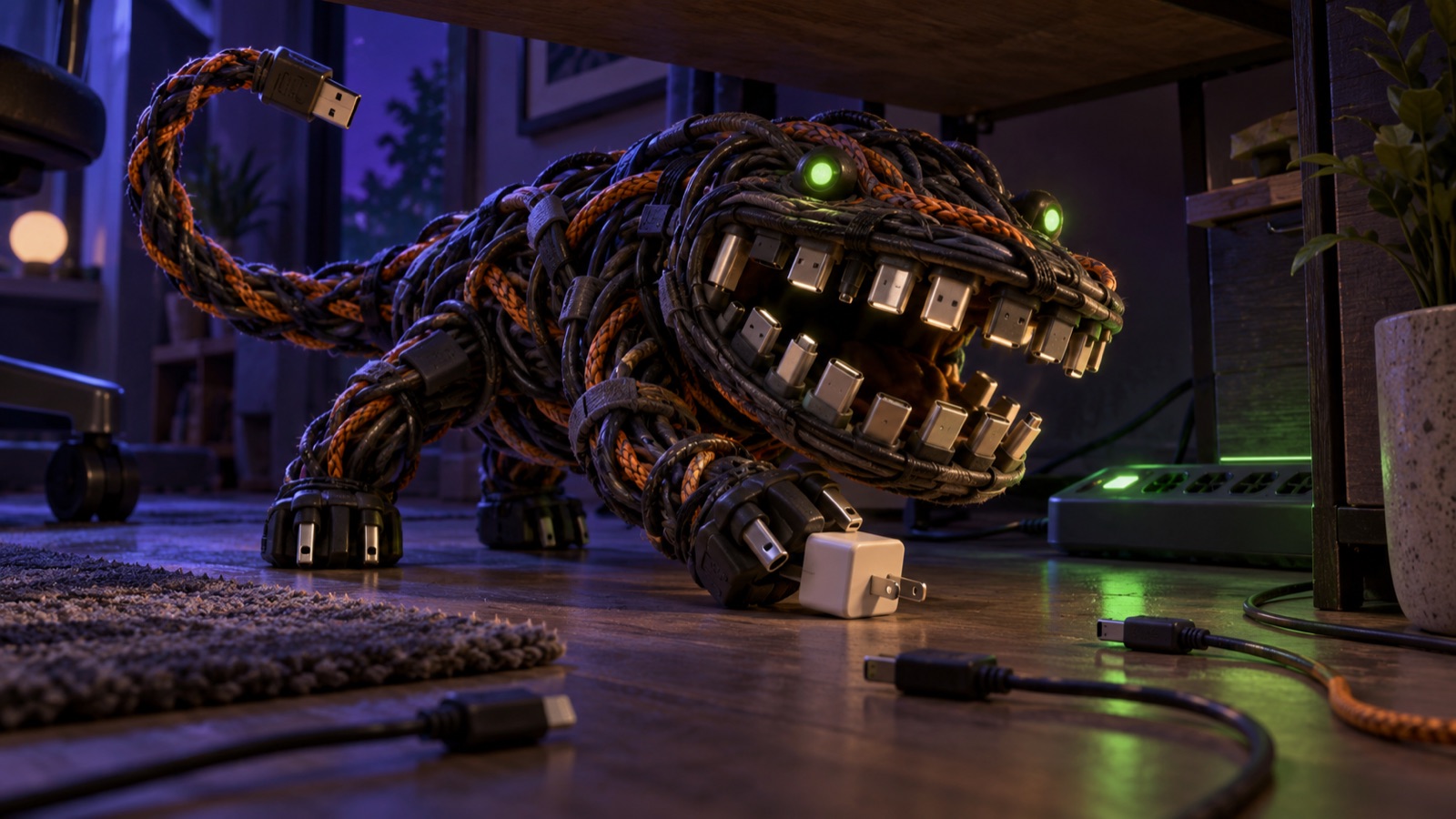
    The creature is low, broad and surprisingly quick. Braided cables make up its muscles, rubber cords wrap around its belly and four plug-shaped feet keep it steady beneath furniture. Its enormous mouth is lined with blunt connector ends. Two tiny indicator lights blink whenever it thinks nobody is looking.

    Cablemaw does not eat devices. It eats certainty. You can know exactly where a charger was a moment ago and still find only an empty patch of desk. Behind you, the creature will be gently dragging the missing lead into a knot that appears to require three extra dimensions.

    Its haunting is most noticeable when you are already late. The shortest cable becomes impossibly tangled. The useful adapter hides inside a coil of obsolete ones. A perfectly ordinary drawer develops the faint, unmistakable sound of somebody stirring a bowl of spaghetti.

    For all its nuisance value, Cablemaw is a proud collector. It arranges beautiful little nests from colourful leads and becomes visibly offended when a visitor describes them as rubbish. Bright orange cables are its particular weakness. It likes to wear them across its shoulders like a ceremonial sash.

    The field guide recommends a purely fictional peace offering: one clearly labelled box reserved for imaginary retired cables. Cablemaw will appoint itself curator and spend the evening reorganising its museum.

    The truce lasts until someone adds a mystery adapter. Then it has to start the entire collection again. Yum yum.
  • The Cachegeist

    The Cachegeist

    The Cachegeist makes its home in the files nobody quite dares to delete. Old presentations, abandoned holiday plans and documents called final-final-really-final gather around it like fallen leaves. In the folklore of haunted hardware, enough unfinished business can eventually learn to walk.

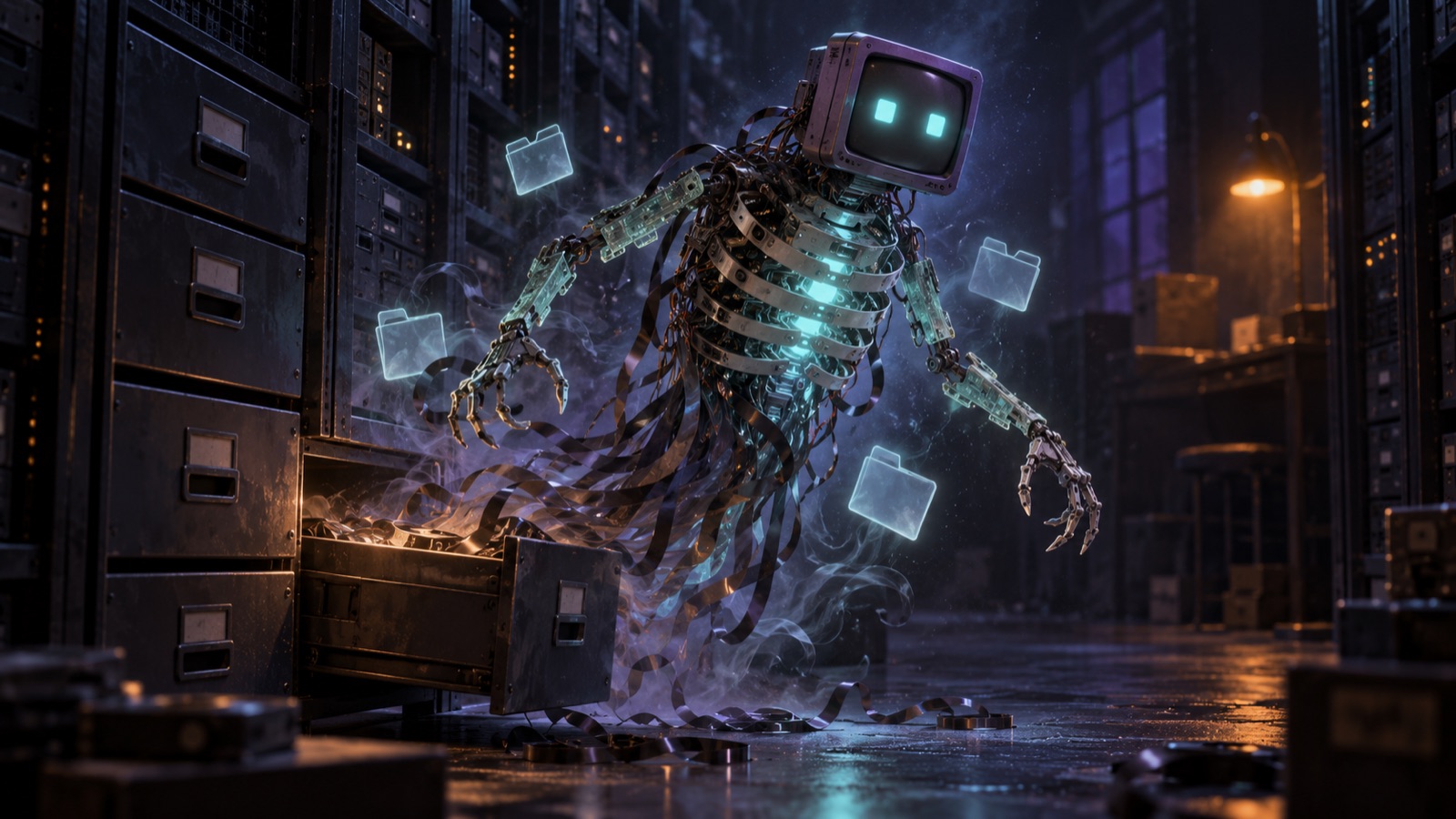
    Its body is a loose arrangement of silver hard-drive platters, memory chips and translucent circuit boards. Magnetic tape hangs from its shoulders in long, restless ribbons. Two pale squares glow inside its hollow screen-shaped head. When it turns towards you, the room fills with the soft clicking of an elderly computer thinking very hard.

    At first, its haunting looks almost helpful. A missing photograph returns. An old note opens at the exact line you need. Then a folder appears containing every version of a project except the one you actually finished. The Cachegeist has an excellent memory and absolutely no sense of relevance.

    It is most active just before a deadline. That is when it rearranges imaginary archives, changes filenames by a single character and whispers the names of forgotten attachments. Its favourite trick is presenting a document you recognise, complete with a paragraph you are certain you never wrote.

    Despite its unsettling habits, the creature is sentimental. It collects little traces of people: an unfinished birthday message, a badly named photograph, the first draft of something that mattered. It seems less interested in stealing the past than in making sure somebody notices it.

    The fictional remedy is a farewell folder. Give one abandoned project a proper name, write down why it mattered and declare it finished. The Cachegeist will settle beside it for the night, quietly reading. Just do not call the folder miscellaneous. It considers that an invitation.

  • The Bufferwraith

    The Bufferwraith

    The Bufferwraith exists in the tiny gap between pressing play and seeing something happen. Most of those gaps close harmlessly. A few grow long enough to develop an opinion. Leave enough imaginary loading screens unfinished, and something eventually starts watching from the other side.

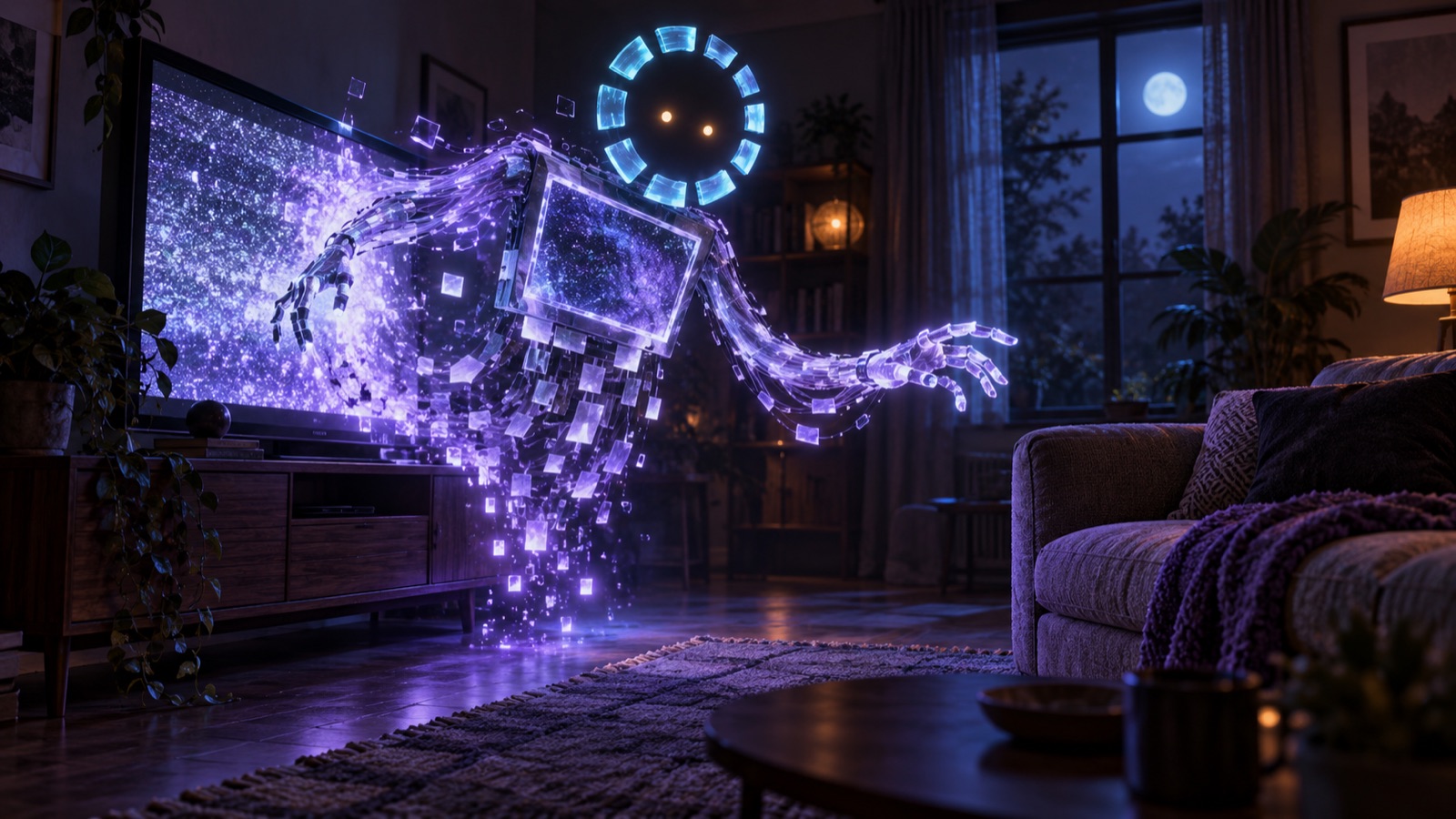
    Its head is a broken circle of glowing segments, forever chasing a final piece that never arrives. Thin sheets of screen glass form its shoulders, while ribbons of violet pixels trail through its body. It moves in little jumps, as though the room cannot quite agree on where it should be.

    The haunting begins with a familiar irritation. A film pauses at the most interesting moment. A voice says half a word. A loading symbol turns with ridiculous confidence. Then the scene resumes, but a background chair has moved closer to the camera.

    The Bufferwraith loves anticipation. It cannot resist a mystery, a cliffhanger or somebody saying, just wait until you see this. Its favourite homes belong to people who keep several shows unfinished. In its private collection, every detective is about to reveal a name and every spaceship is about to open a door.

    It is not especially brave. Sudden endings confuse it, and a story that resolves neatly can make its outline collapse into a shower of dim squares. It prefers endless previews because a promise is much more nourishing than a conclusion.

    According to the fictional field guide, the gentlest way to dismiss it is to tell a very short story with a definite ending. Begin, explain what happened and finish without teasing a sequel. The creature will wait for one last twist. When none comes, its circle finally closes, and the room becomes wonderfully still.

  • The Null Bell

    The Null Bell

    The Null Bell is always waiting for somebody to answer. Maybe it will answer you.

    According to the fictional stories told about it, the creature formed from a thousand unanswered doorbell alerts, gathering every polite pause on every empty doorstep into a single, impossibly patient visitor.

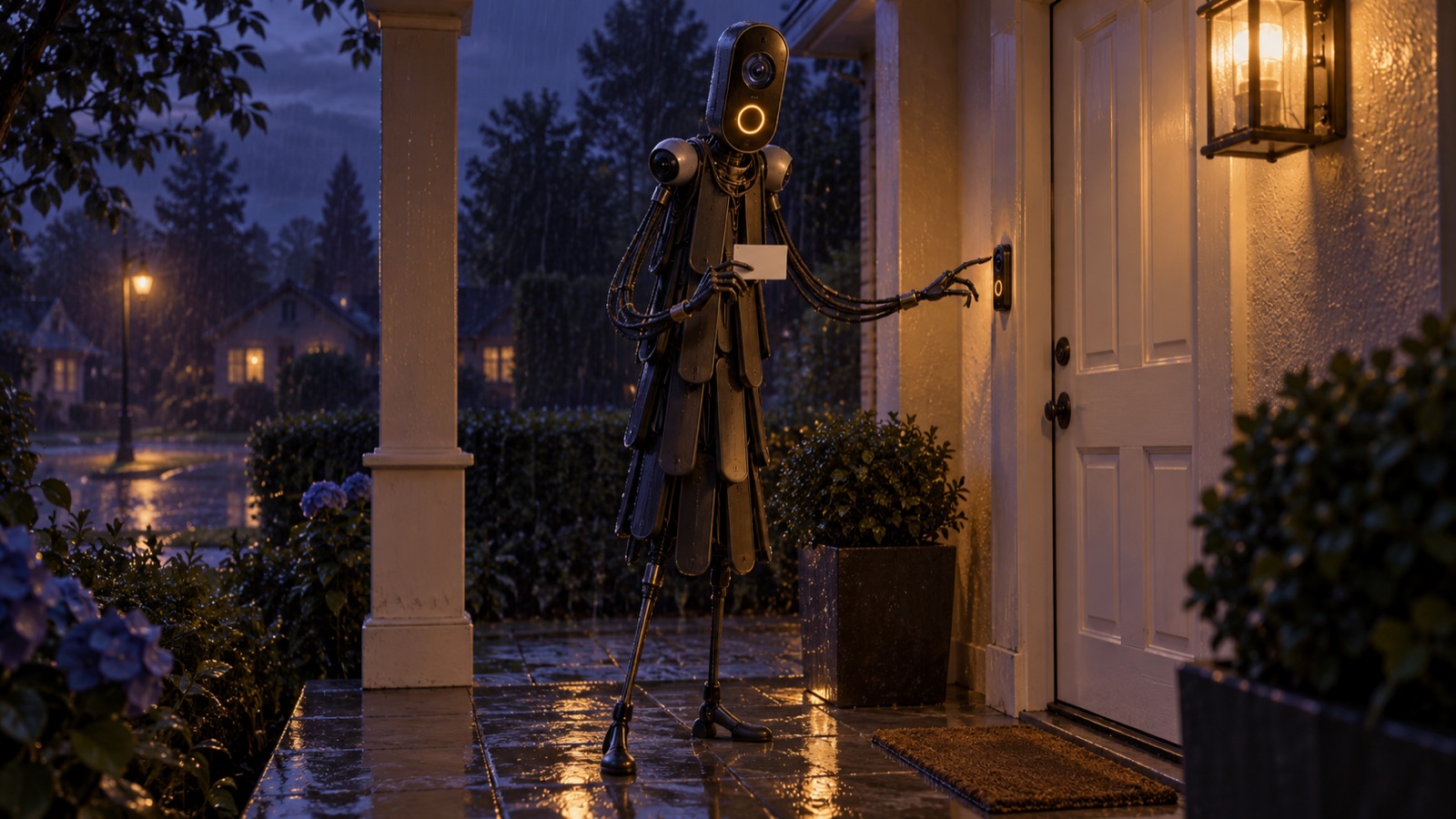
    It wears a long coat made from overlapping privacy shutters. Thin network cables form its arms, and telescoping tripod legs let it stand perfectly still. Its face is an oval doorbell panel: one dark camera lens above an amber ring. The ring brightens whenever it believes an introduction is overdue.

    The first sign is a visitor notification with nothing in the picture. The second is a faint reflection in the door glass, positioned exactly where a person ought to be. By the third night, the recording contains a small white calling card. Both sides are completely blank.

    The Null Bell follows an elaborate code of manners. It never pushes past a closed door or interrupts a conversation. Instead, it rings at the pause between two sentences. If nobody responds, it moves one careful step closer to the nearest camera and waits for another suitable moment.

    What makes it unsettling is its eagerness to help. It announces imaginary parcels, reminds an empty house that somebody is outside and holds the porch light for guests who never arrive. The creature has mistaken being constantly available for being welcome.

    In the invented field guide, its haunting ends with a courteous boundary. Leave a fictional calling card that says visiting hours are over, and thank it for stopping by.

    The Null Bell will straighten its coat, offer a tiny mechanical bow and walk away down the path. Its footsteps sound exactly like a notification being dismissed.

    Ding ding. That’s for you.